


DNA Collection May Lead to Increased Government Surveillance
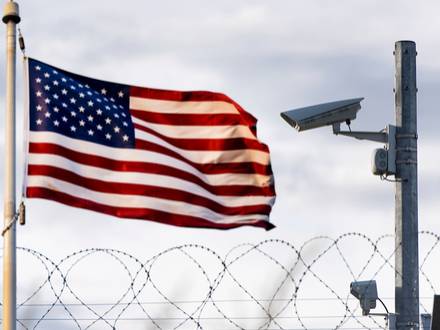 Since the beginning of President Donald Trump’s second term in office, his administration has focused on cracking down on illegal immigration. Immigration and Customs Enforcement (ICE) and other branches of the Department of Homeland Security (DHS) have been conducting operations in which thousands of people have been detained, including undocumented immigrants, people who are in the country legally, and even U.S. citizens. As part of these efforts, DHS has been collecting DNA samples and other biometric data, which has raised concerns about increased government surveillance and the ways this data could be used in criminal cases.
For those who may be charged with federal crimes, understanding the role that DNA evidence, biometric data, and other information collected by the government can play in these cases is not always easy. In these situations, a skilled attorney can help ensure that a person’s rights will be protected while also working to develop successful defense strategies.
Expansion of DNA Collection and Other Forms of Surveillance
One of the first executive orders signed by President Trump after beginning his second term directed DHS to begin collecting DNA samples from everyone it detains. While the DNA Fingerprint Act of 2005 allowed the government to collect DNA samples and use them as an identification tool, this was rarely done until recently. However, under President Trump, ICE and Border Patrol officers have begun using cheek swabs to collect DNA from people who are detained. The data is then uploaded to a criminal DNA database known as CODIS.
In the past, the FBI and other government agencies have used CODIS as an investigative tool to identify suspects in criminal cases. Now, activity by DHS is transforming CODIS into a system of surveillance. The information in the database is being used to track people who may commit crimes in the future rather than matching DNA profiles to people who are being investigated for crimes that have already occurred.
This is only one aspect of the expanded use of DNA collection and other forms of surveillance. As part of a new proposal, DHS is looking to collect DNA samples not only from people who are detained, but also from anyone who is involved in immigration cases. U.S. citizens or Green Card holders who file petitions to sponsor family members for immigration may be required to give samples. Family members or others who are included in petitions or who are associated with a case may also have their DNA taken. All of this information will be stored indefinitely in databases and potentially used by multiple government agencies.
The government is also looking to expand the data it collects. The proposal by DHS would also gather and monitor other types of biometric data in an effort to continue screening people during immigration cases. These biometrics may include fingerprints, voice patterns, facial structure, palm patterns, iris and retina scans, and even behavioral characteristics. Nearly any measurable data related to a person’s physical characteristics or activities may be saved. While DHS states that records would be "closed" after an immigrant becomes a U.S. citizen, data will not be deleted, and it may be shared across multiple government agencies.
As the government takes steps to gather as much data as possible, this information could be used in a variety of ways. Immigrants who are proceeding through the system may be closely monitored, and any alleged violations could threaten their status in the United States or lead to criminal charges. Others who are involved in immigration cases could also have their data used in criminal cases that are unrelated to immigration.
Because of the complex web of government agencies and the laws that protect people’s rights, people who are facing criminal charges will need to work with an attorney who understands the role that data collected by the government can play in these cases. A skilled lawyer can challenge evidence that was gathered in violation of a person’s rights, and they can determine the best ways to defend against criminal charges involving DNA evidence, biometric information, and other data gathered through surveillance.
Contact Our Connecticut Criminal Defense Lawyers
At Woolf & Ross Law Firm, LLC, we work to protect the rights of people who are facing criminal charges at the federal or state level. We can determine how to address evidence such as DNA, biometrics, and digital information. We can take steps to address violations of a person’s constitutional rights, and we will build effective defense strategies to help our clients resolve their cases successfully. Learn more by contacting our Hartford federal crimes defense attorneys at 860-290-8690 and setting up a free consultation.
Rocky Hill Office
2049 Silas Deane Hwy, Suite 203
Rocky Hill, CT 06067
P 860-290-8690

Free Consultations 860-290-8690


