


Surveillance Reform Bill May Protect People in Federal Investigations
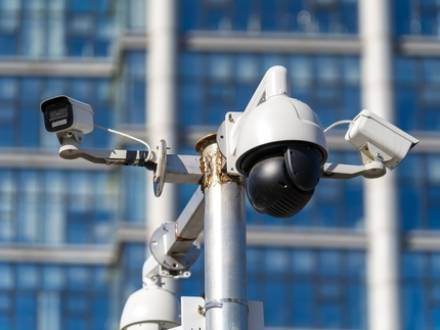 In the 21st century, it can seem like everyone is under constant surveillance. Nearly everything anyone does generates data that is gathered by companies and data brokers. This has raised concerns about how data may be accessed by the government and how it may be used to investigate or prosecute people for federal crimes. Fortunately, a new bill that has been introduced in Congress may help to protect people’s privacy and prevent them from being subject to government surveillance.
As new technologies develop and the laws change to address them, determining how to address issues related to data and surveillance in criminal cases can be difficult. For those who may need to defend against federal crimes, it is crucial to work with a criminal defense attorney who understands the steps that can be taken to address searches performed by government officials, determine the role that different types of data will play in a case, and address any constitutional violations that have occurred.
Potential Changes Under the Government Surveillance Reform Act
The practices followed by federal investigators have raised concerns about how people’s rights may be violated. To address these issues and make sure people’s privacy rights are protected when government officials perform searches or place people under surveillance, a group of senators and representatives has introduced the Government Surveillance Reform Act of 2026. This bill would make a number of reforms to Section 702 of the Foreign Intelligence Surveillance Act (FISA), including:
-
Closing the "backdoor search" loophole: Section 702 allows the government to perform searches related to non-U.S. residents who are located outside of the United States without obtaining a search warrant. However, because many people in the U.S. communicate with people in other countries, these searches may be used to gather information about U.S. citizens or other residents. The new law would restrict the government from performing searches and using the "incidental" information they gather to investigate and prosecute people in the United States.
-
Closing the data broker loophole: Certain companies gather large amounts of information about people based on their use of electronic devices, websites, and apps. They will often sell this data to advertisers, but in some cases, the government may take steps to obtain data from brokers and use it in investigations of federal crimes. Because data is not being gathered directly from people, this can often be done without obtaining a warrant. The new law would prohibit the government from purchasing people’s personal data from data brokers.
-
Prohibiting reverse targeting: In some cases, government investigators may target foreign people for the specific purpose of obtaining information about their communications with people in the U.S.The new law would restrict these searches, requiring searches to be related to foreign intelligence and preventing the government from searching for information related to U.S. residents without a warrant.
-
Repealing "make everyone a spy" provisions: A 2024 law that expanded FISA allows the government to force businesses or organizations that are considered to be "electronic communication service providers" to turn over information. These businesses include data centers, landlords, or any business that has access to computer server equipment. The new law would repeal these provisions and limit the government’s ability to obtain information from these parties without a warrant.
-
Updating privacy protections to address modern technologies: The new law addresses changes to technology that have occurred in recent years, helping to protect data related to certain programs or devices. It would require the government to obtain a warrant to obtain information about web browsing data, search records, the use of chatbots and AI tools, and data recorded by onboard computers in vehicles.
Contact Our Connecticut Federal Crimes Defense Attorneys
While changes to the law may provide some protections for people who are investigated by the federal government or who are charged with federal crimes, legal representation will still be important for people who may face federal prosecution. At Woolf & Ross Law Firm, LLC, our Hartford federal crimes lawyers understand the best ways to protect our clients’ rights and help them defend against convictions. We work to ensure that our clients will be able to defend against federal charges successfully. Contact our firm today by calling 860-290-8690 to arrange a free consultation.
Rocky Hill Office
2049 Silas Deane Hwy, Suite 203
Rocky Hill, CT 06067
P 860-290-8690

Free Consultations 860-290-8690


